









tutorbin

astrophysics homework help

Boost your journey with 24/7 access to skilled experts, offering unmatched astrophysics homework help

tutorbin

Trusted by 1.1 M+ Happy Students

WhatsApp Support

Get Instant
Online Homework Help
via WhatsApp

Get instant homework help from top tutors—just a WhatsApp message away. 24/7 hw help support for all your academic needs!

A
S
M
R
★★★★★
2M+ students trust TutorBin
Your WhatsApp Number
phone
or
⚡ Instant reply
🔒 100% private
👨‍🏫 Top tutors
🌍 All subjects
*Get instant homework help from top tutors—just a WhatsApp message away. 24/7 support for all your academic needs!
2M+ Students Helped24/7 Live SupportExpert TutorsAll Subjects CoveredInstant Response100% ConfidentialTop Rated ServiceMoney-back Guarantee2M+ Students Helped24/7 Live SupportExpert TutorsAll Subjects CoveredInstant Response100% ConfidentialTop Rated ServiceMoney-back Guarantee

Recently Asked astrophysics Questions

Expert help when you need it
  • Q1:MATINS BETERE 1) If an object is in Earth's orbit (a=1.000 A.U., e=0.0167) and suddenly increases its energy by 10 per cent without increasing its angular momentum [perhaps it fires a rocket engine towards the Sun, accelerating it directly outwards]: what is the final semi-major axis and eccentricity of the object's orbit? Note: E<0. Therefore increasing E by 10% means less negative or 90% of the original value. (Marks: 4) 2) The Earth was last at perihelion on January 3, 2022. The period of the Earth's orbit is 365.25 days. (a) If the Earth's orbit was a perfect circle when (give the actual calendar date in your answer!) would it reach a True Anomaly (angle with respect to perihelion) of 160 degrees? (b) But given that the Earth's orbit is slightly elliptical (e-0.0167), when (calendar date) will the Earth actually be at True Anomaly of 160 degrees? (c) How far will the Earth be from the Sun at that time? (d) How fast will the Earth be moving in its orbit on that day? (e) (for comparison to (c) and (d)) what is the distance (from the Sun) and speed of the Earth when it is at perihelion? (Marks 10) 3) How bright will Pluto appear in reflected or scattered sun-light (total Flux received in W/m²) at the Earth when Pluto is at Opposition and a distance from the Sun of 40.0 A.U.? Assume that Pluto has an albedo of 0.60 and a radius of 1.2 x 10³ km. (Marks: 6) DELLSee Answer
  • Q2:The University of Queensland, School of Mechanical and Mining Engineering MECH2210 Dynamics and Orbital Mechanics Section B1- Tutorial Problems 2022 Assignment B1, Submit: 0.3 & 17 due Mon wk 11 Online Dynamics Revision Quiz The following problems cover orbital mechanics material - please attempt all: Module/Question - 1/7, 2/12, 2/21, 3/5-12, 4/5, 6/3. (Answers online) F ᏛᎾ . B m Problem 1 Explorer No.1 launched in January 1958 had perigee and apogee heights above the Earth's surface of 360 km and 2550 km and an inclination of 33.2°. Calculate the: a) orbit period, b) its eccentricity, c) the total energy (per unit mass of the orbit) d) the angular momentum (per unit mass of the orbit), e) the maximum and minimum speeds and orbit positions f) the minimum impulse to change the inclination to 0° assuming the satellite passes the equator at its perigee, g) the minimum impulse Av required to escape Earth. (Answers: 1.92hr,0.14, -25.4 MJ/kg, 5.53x10¹⁰ m²/s, 8.2p & 6.2a km/s, 3.54 km/s, 2.67 km/s) Problem 2 An earth satellite is tracked from ground stations and is observed to have an altitude of 2200 km, a velocity magnitude 7 km/s and a radial velocity of 2.7 km/s. Determine: a) the total orbital energy per unit mass b) the orbital eccentricity e c) the minimum altitude and the maximum speed and d) the true anomalies at the observed position and at the point of maximum speed. e) Identify any potential difficulties with the orbit. (Answers: -22 MJ/kg, 0.389, -835km & 10 km/s, 105.3deg & 0 deg, crash into Earth) Problem 3 An early warning defence system detects an UFO travelling at 800km above earth's surface with a horizontal (perpendicular) speed of 8 km/s and a vertical (radial) speed of 1.3 km/s. Determine: a) the total energy (per unit mass of the orbit) b) the angular momentum (per unit mass of the orbit), c) the eccentricity of the orbit e d) the minimum and maximum radii of the orbit e) the true anomaly 9 at the point of observation. f) whether the UFO is possibly a missile, Earth satellite or comet and explain your answer. g) the minimum measured speed v of the UFO for it to be a comet and explain why. (Tot. 21 mks = 3 x 7) Problem 4See Answer
  • Q3:For the following line elements and vector V", write down the metric, the inverse metric, and See Answer
  • Q4:Problem 1. (15 points) Ptolemy vs Copernicus (1) In this problem and the next we will compare how Ptolemy and Copernicus handled the inner (or inferior) and outer (or superior) planets in their respective models of the Solar System. To keep things simple, we will neglect the planets' eccentricities for the purposes of these two problems. (a) As we discussed in class, in Ptolemy's geocentric model of the Solar System the centers of the epicycles for the inferior planets Mercury and Venus are tied to the motion of the Sun, in order to keep these two planets from 'wandering' too far away from the Sun in the sky. The maximum elongations (i.e., angular distance from the Sun) observed for Mercury and Venus are max 22.8° and 46.3°, respectively. Demonstrate that, in the Ptolemaic model, 0 max can be used to estimate the ratio of the radius of the epicycle, E for each planet to that of its deferent, D, but not their absolute values nor their ratios to the Earth-Sun distance. = (b) In the Copernican model, on the other hand, show that the orbital radius of an inferior planet is given by r = R sin max, where R is the Earth's orbital radius, or 1 Astronomical Unit (AU). Use the values of max given above to evaluate r for Mercury and Venus. Give your answers to 3 decimal places. (c) With the help of a diagram, calculate the minimum and maximum distances from the Earth for an inferior planet in the Ptolemaic model in terms of D and the parameter (max. (d) Do the same for the Copernican model, giving your results in terms of R and max. Show that the ratio of minimum to maximum distance is the same for both models. (Do this analytically, rather than numerically.) In this sense, the two models are equivalent, but Copernicus considered the inability to relate the orbital radii of Mercury & Venus to that of the Earth to be a major failing of the old model. Do you agree?See Answer
  • Q5:Please explain to the class the questions below: Are these statements True or False? Justify your answer for one of them. 1. The neap tides occur at the new moon and full moon. 2. Spring tides occur during the new and full lunar phases. 3. Special relativity states the relationship between energy and mass as E = m0c2. 4. There is no gravity in space. 5. Newton's first law of motion is essentially a restatement of Galileo's law of inertia.See Answer
  • Q6:1)All the planets in the Solar System revolve in a clockwise motion.See Answer
  • Q7:2)The inner planets are composed of rock and metal, and the outer planets are rich in low-density gases such as hydrogen and helium.See Answer
  • Q8:3)Terrestrial planets grew slowly and the Jovian planets grew quickly.See Answer
  • Q9:33 A satellite is orbiting at a distance of 4.2 x 10⁶ m from the surface of the Earth. The radius of the Earth is 6.4 x 10⁶ m. What is the ratio of gravitational force on the satellite in orbit/gravitational force on the satellite on the surface of the Earth? A 0.36 B 0.42 C 0.51 D 0.64 Answer give DSee Answer
  • Q10:34 A satellite of mass 1 600 kg is orbiting the Earth with radius 2R. R is the radius of the Earth which is equal to 6.37 × 10⁶ m. What is the centripetal force acting on the satellite? [G = 6.67 × 10-¹1 N m² kg-2, mass of the Earth = 5.97 x 1024 kg] A 1744 N B 1806 N C 1960 N D 3 925 NSee Answer
  • Q11:Analyze and Interpret 1. Describe the pattern on your graph. 2. The Sun's spectral type is about G2. Use your chart to predict the Sun's absolute magnitude. 3. Vega's spectral type is A0. Predict Vega's absolute magnitude. 4. Predict the absolute magnitude of a star whose spectral type is B5. Conclude and Communicate 5. Summarize how you can use this pattern to predict a main- sequence star's absolute magnitude if you know its spectral type.See Answer
  • Q12:Problem 4 (10 pts.): Two elliptical orbits share the same central body and apsidal line as shown in below figure. Point A lies at the apogee of orbit 1. Point B lies at the apogee of orbit 2. Perform a Hohmann transfer from point A to point B. All numbers have been non-dimensionalzed such that μ 1. The apogee and perigee of orbit 1 and 2 are given by = = 10 and Respectively. What is the total Av for the maneuver? 11p₁ = 4 √√₁2 = 8 (p2 = 3 Point BSee Answer
  • Q13:1. (10 pts) Manually draw the layout and patterns of motion of the solar system. Please include the Sun and all planets. Draw the orbits of all planets around the Sun (2 pts) Label the orbit direction and spin direction of all planets. Label the spin direction of the Sun. (2 pts) Label the planets' average orbital distances from the Sun in AU and their orbital periods in Earth years (2 pts) Label the size of the Sun and each planet as compared to Earth's radius (e.g. 0.5 Earth radius, 2 Earth radii,...) (2 pts) Point out the exceptions to the patterns of motion (2 pts). (The sizes and distances do not need to be drawn to scale, which is impossible to do on letter sized paper anyway.) • •See Answer
  • Q14:2. (6 pts) Formation of the solar system (nebula theory) a) From what you drew for Question 1, you should be able to tell the spin direction of the protoplanetary disk (the disk formed from the collapse and flattening of the original nebula) during the formation of the solar system. What is the spin direction? (2 pts) b) Where is the frost line with respect to the planets' orbits? (2 pts) c) Why are most icy bodies (e.g. icy moons, comets, dwarf planets) found outside the frost line? (2 pts)See Answer
  • Q15:3. (2 pts) Manually draw a bound orbit and an unbound orbit around a planet. Mark where the planet is with respect to the orbits.See Answer
  • Q16:4. (6 pts) Planetary geology a) What is the difference between lithosphere and crust? (2 pts) b) Describe convection in a terrestrial planet. How does it cool the planetary interior? (4 pts)See Answer
  • Q17:Question 1 a. Define the terrestrial age of a meteorite and explain, how this is determined. b. if a meteorite were to be of Martian origin, explain where the oxygen isotope composition of this sample and other Martian samples would appear with respect to the terrestrial fractionation line (TFL) on a plot of 170 versus 180 using figure 9.16 Figure 9.16 A plot of 80 and 8¹% for whole-rock meteorites is shown in Figure 9.16. Compare the scales of this plot with those of Figure 9.15; while astronomical entities display vast variations in oxygen isotopic compositions, those of materials formed within the solar nebula are much less variable (although the small differences which can be measured are of immense importance). Note the line of slope 0.5 representing the TFL. 870% 2 terrestrial fractionation line 17 calcium-aluminium- rich inclusions 2 8180/% bulk meteorites Figure 9.16 Plot of 6¹70 and 5180 for whole-rock meteorite samples. Each different coloured field represents a different type of meteorite group (included on the plot are fields for different groups of carbonaceous chondrites, different types of ordinary chondrites, Martian meteorites, HEDs, and so on). The inset shows the range in oxygen isotopic composition of all bulk meteorite samples and covers a range in 8¹O values from -40 to +20% and in 8¹70 values from -40 to +30%. The region of the main graph is 10 shown by the shaded box in the inset. (Franchi et al., 2001)See Answer
  • Q18:Question 5 Outline three competing views for the origin of the Earth's water. Cite appropriate examples that can help to distinguish between the three different views, taking into account any limitations or gaps in our current knowledge.See Answer
  • Q19:Instructions Access the simulator & provide the answers to the following questions. Typed work needed HR Diagram Explorer: https://astro.unl.edu/naap/hr/animations/hr.html/n Lab 11: HR Diagram Background Information Work through the background sections on Spectral Classification, Luminosity, and the Hertzsprung-Russell Diagram. Then complete the following tables. Table 1: The table below summarizes the relationship between spectral type, temperature, and color for stars. Surface Temperature K Spectral Type Color M1 M5 4560 K G2 6100 K F5 8590 K 13000 K 09 40000K Table 2: Complete the following table related to stellar luminosities in solar units using the equation L × R²T4. Note that Ro represents the radius of the Sun, To its temperature and Lo its luminosity. Radius (R) Temperature (To) Luminosity (LO) 1 1 1 2 2 1 1 1/3 10 1 1 10 Table 3: Complete the following table relating luminosity and mass in solar units for main sequence stars using the equation L × M³.5 Mass (Mo) Luminosity (Lo) 1 2 5 3160 0.1 HR Diagram Explorer Open the HR Diagram Explorer. Begin by familiarizing yourself with the capabilities of the Hertzsprung-Russell Diagram Explorer through experimentation. An actual HR Diagram is provided in the upper right panel with an active location indicated by a red x. This active location can be dragged around the diagram. The options panel allows you to control the variables plotted on the x-axis: (temperature, B-V, or spectral type) and those plotted on the y-axis (luminosity or absolute magnitude). One can also show the main sequence, luminosity classes, isoradius lines, or the instability strip. The Plotted Stars panel allows you to add various groups of stars to the diagram. The Cursor Properties panel has sliders for the temperature and luminosity of the active location on the HR Diagram. These can control the values of the active location or move in response to the active location begin dragged. The temperature and luminosity (in solar units) are used to solve for the radius of a star at the active location. The Size Comparison panel in the upper left illustrates the star corresponding to the active location on the HR Diagram. Note that the size of the sun remains constant. Exercises Drag the active location around on the HR Diagram. Note the resulting changes in the temperature and luminosity sliders. Now manipulate the temperature and luminosity sliders and note the corresponding change in the active location. Table 4: Check the appropriate region of the HR diagram corresponding to each description below. Description Hot stars are found at the: Cool stars are found at the: Luminous stars are found at the: Dim stars are found at the: Top Right Bottom Left Drag the active location around on the HR Diagram once again. This time focus on the Size Comparison panel. Table 5: Check the appropriate region of the HR diagram corresponding to each description below. Description Upper Left Upper Lower Right Right Lower Left Large Blue stars are found at the: Small Red stars are found at the: Small Blue stars would be found at the: Really Large Red stars are found at the: Check show isoradius lines. Note that at each point on a green line, stars have the same value of radius. Use these isoradius lines to check your answers in the table above. Table 6: Fill the table with brief explanation of the location of the described stars referring to the equation L × R²T4. Description Large Blue stars Small Red stars Small Blue stars Really Large Red stars Reason for location For the next exercise you will have to change the luminosity or the temperature of the star in order to keep it on the main sequence, an identify the star's approximate radius. Table 7: Fill the table with the correct values to keep the star on the main sequence. Use To=5800K Temperature (To) Luminosity (L) Radius (R) 0.5 0.7 1 1 1 2 15 6.5 For the last exercise explore the luminosity classification by checking show luminosity classes. The green region (labeled dwarfs V) is known as the main sequence and contains all stars that are fusing hydrogen into helium as their primary energy source. Over 90% of all stars fall in this region on the HR diagram. The other highlighted regions are giants, supergiants, white dwarfs. Move the active cursor up and down each region and explore the different values of, luminosity, temperature and stellar radius. Table 8: Fill the table with statements describing the stars that belong to each class. (Example: Stars in this class have high/low luminosity, high/low temperature, big/small radius) Description Giant Supergiant White dwarf Luminosity, temperature and radius. Final Questions 1. Describe the sizes of stars along the main sequence. What are stars like near the top of the main sequence, the middle, and the bottom? 2. Describe the masses of stars along the main sequence. What can you conclude? 3. Can a star with a radius equal 1000 Ro be on the main sequence? Explain your answer. 4. Which is larger a blue supergiant or a red supergiant? Explain. 5. Which is larger a white dwarf or a red dwarf? Explain.See Answer
  • Q20: SPH 4UV FCA Final Culminating Activities LAB - complete a report and find the mathematical relationship between 2 variables (possible topics listed on the following page) Check list Writing: ☐ Include headings for report (Objective, Materials, Procedure, Observations, Results, Conclusions) ☐ Procedure has enough detail that I could reproduce the lab and come up with similar values BUT it does not have any of my teacher voice giving instructions to students Writing is formal, third person Tables and graphs are explained and embedded in writing Communication of tables & graphs: ☐ graphs have the following: gridlines, titles, units, error bars, shown to origin (if appropriate) ☐ Tables are well organized have units & headings Concepts ☐ Appropriate line / curve shown on the graph Terminology matches appropriate line / curve (proportional, linear, quadratic, root, inverse OR possibly a polynomial of higher degree) ☐ Equation matches appropriate line / curve BUT is a general case discussed in class (for example do NOT use y=3x+0.0004 if you are saying it's proportional> use y=3x if it's proportional) ☐ If a curve is used, the fit is CONFIRMED by adding a column (or a new table) AND by checking for a proportional graph (and the proper variables are graphed for this) ☐ If you are using data from the textbook, you MUST ALSO provide a log-log graph with the slope calculated to confirm your curve (instructions for this are on the first test) ☐ Sources of error are mentioned ☐ Conclusions give equation and name the relationship POSSIBLE TOPICS: C. Go to the planetary data (posted under content / circular & celestial motion) and find the relationship between the period of revolution of orbit and the mean radius of orbit. Confirm with radius cubed and period squared AND create a log-log graph of period vs orbit and find the slope. OPTION C: Planetary Data Assignments ar System Object Mass (kg) Radius of Object (m) Sun 1.99 X 1030 6.96 X 10⁸ Period of Rotation on Axis (s) 2.14X10⁶ Mean Radius of Orbit (m) Period of Revolution of Orbit (s) Orbital Eccentricity Mercury 3.28 X 10²³ 2.44 X 10⁶ 5.05 x 10⁶ 5.79 x 10¹⁰ 7.60 x 10⁶ 0.206 Venus 4.83 x 1024 6.05 x 10⁶ 2.1 x 10⁷ 1.08 x 10¹¹ 1.94 x 10⁷ 0.007 Earth 5.98 X 1024 6.38 x 10⁶ 8.64 x 10⁴ 1.49 X 10¹¹ 3.16 x 10⁷ 0.017 Mars 6.37 x 10²³ 3.40 x 10⁶ 8.86 X 10⁴ 2.28 X 10¹¹ 5.94 x 10⁷ 0.093 Jupiter 1.90 X 1027 7.15 x 10⁷ 3.58 X 10⁴ 7.78 × 10¹¹ 3.75 X 10⁸ 0.048 Saturn 5.67 x 1026 6.03 x 10⁷ 3.84 x 10⁴ 1.43 X 10¹² 9.30 X 10⁸ 0.056 Uranus 8.80 X 1025 2.56 x 10⁷ 6.20 x 10 2.87 x 10¹² 2.65 x 10⁹ 0.046 Neptune 1.03 X 1026 2.48 × 10⁷ 5.80 x 10⁶ 4.50 X 10¹² 5.20 x 10⁹ 0.010 Pluto 1.3 x 10²³ 1.15X10⁶ 5.51 X 10⁵ 5.91 X 10¹² 7.82 X 10⁹ 0.248 Moon 7.35 X 10²² 1.74 x 10⁶ 2.36 x 10⁶ 3.84 X 10⁸ 2.36 x 10⁶ 0.055See Answer

TutorBin Testimonials

I found TutorBin Astrophysics homework help when I was struggling with complex concepts. Experts provided step-wise explanations and examples to help me understand concepts clearly.

Rick Jordon

5

TutorBin experts resolve your doubts without making you wait for long. Their experts are responsive & available 24/7 whenever you need Astrophysics subject guidance.

Andrea Jacobs

5

I trust TutorBin for assisting me in completing Astrophysics assignments with quality and 100% accuracy. Experts are polite, listen to my problems, and have extensive experience in their domain.

Lilian King

5

I got my Astrophysics homework done on time. My assignment is proofread and edited by professionals. Got zero plagiarism as experts developed my assignment from scratch. Feel relieved and super excited.

Joey Dip

5

Popular Subjects for astrophysics

You can get the best rated step-by-step problem explanations from 65000+ expert tutors by ordering TutorBin astrophysics homework help.

TutorBin helping students around the globe

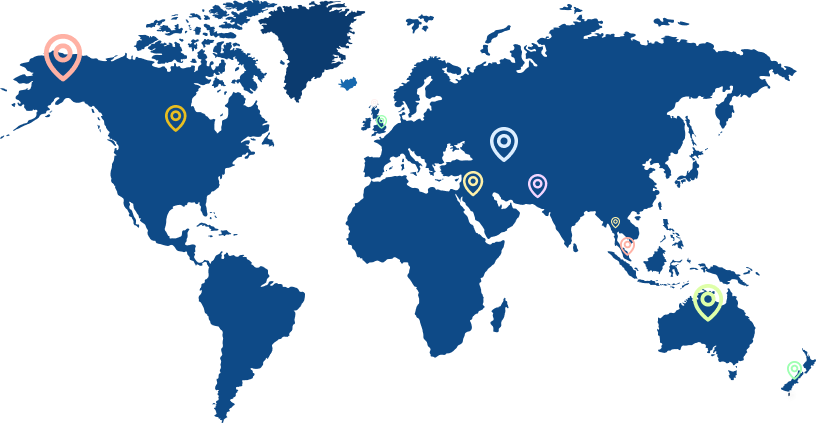
TutorBin believes that distance should never be a barrier to learning. Over 500000+ orders and 100000+ happy customers explain TutorBin has become the name that keeps learning fun in the UK, USA, Canada, Australia, Singapore, and UAE.